
- Catalog
- Books
- Freemasonry Secret Societies
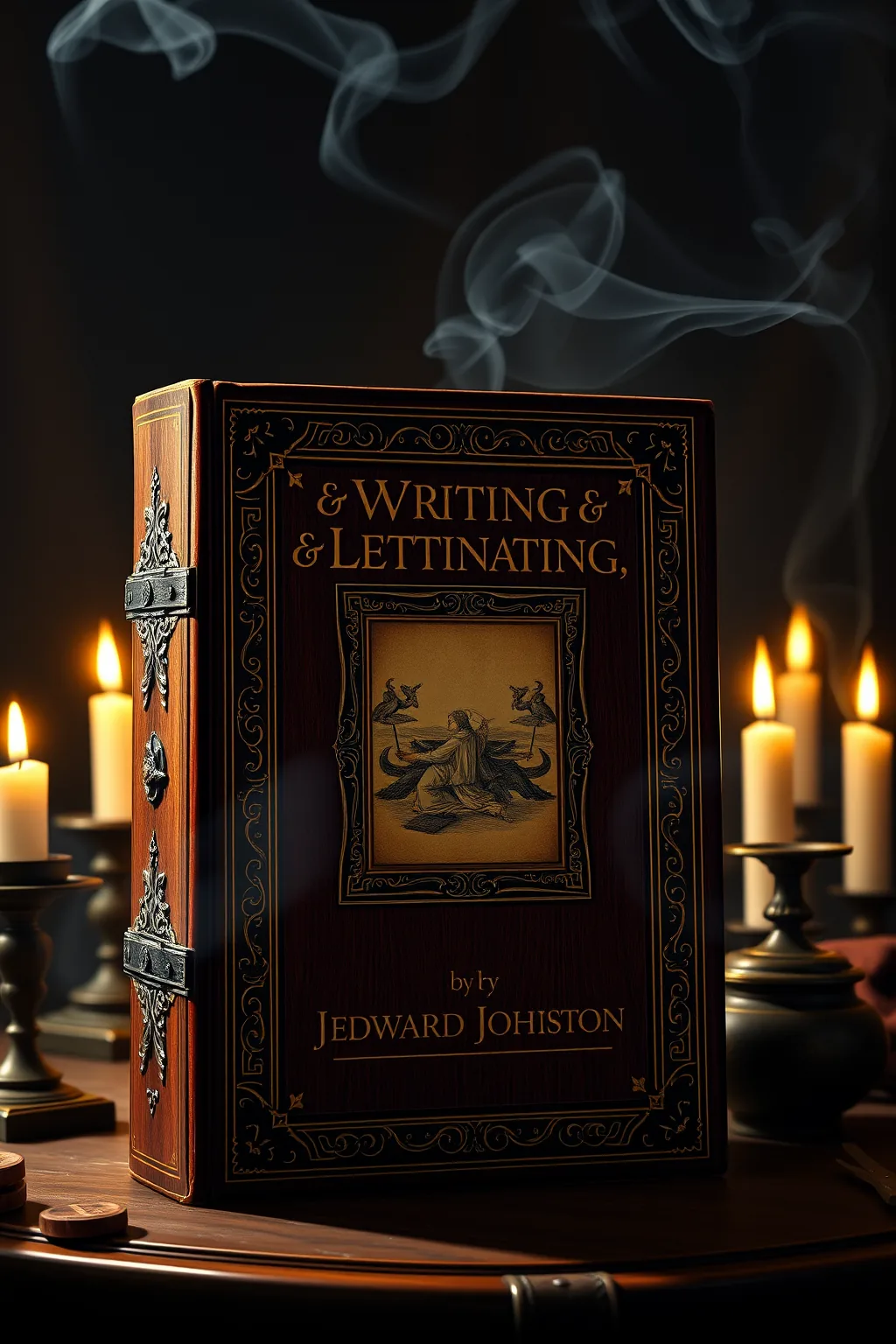
- Writing & Illuminating, & Lettering
 89
89

Writing & Illuminating, & Lettering
Edward Johnston published 'Writing & Illuminating, & Lettering' in 1906, codifying historical script forms.
Edward Johnston's 1906 book, 'Writing & Illuminating, & Lettering,' is a foundational text for understanding historical scripts and manuscript decoration. It details the practical techniques of calligraphy and illumination, explaining the tools, materials, and methods used by medieval scribes. Johnston breaks down letter construction into its essential geometric forms, emphasizing proportion and structure. The book also touches on the symbolic and philosophical aspects of lettering, connecting the visual form of letters to deeper meanings. It guides the reader through the process of creating illuminated manuscripts, from preparing the vellum and pigments to applying gold leaf and painting decorative elements. Johnston's approach bridges historical practice with an appreciation for the aesthetic and spiritual dimensions of the craft.
📝 About the book: Writing & Illuminating, & Lettering
Study the arcane artistry of 'Writing & Useful, & Lettering' by Edward Johnston, an important work that unveils the mystical secrets of manuscript illumination and calligraphy. This book is an esoteric journey through the hidden knowledge of lettering, revealing the symbolism and philosophical significance that lie beneath the surface of written words. It transports readers to an atmosphere of ancient scribes and illuminators, where every stroke of the pen is imbued with spiritual meaning. Intended for seekers of esoteric wisdom, this text offers useful insights into the mystical traditions of lettering and illumination, making it an indispensable resource for those who wish to explore the deeper dimensions of written communication.
💎 Expert review
📖 Why choose
Why this book is worth reading
Read 'Writing & Useful, & Lettering' to uncover the mystical secrets of lettering and manuscript illumination. Ideal for seekers of hidden knowledge, scholars of esoteric traditions, and practitioners of occult arts, this book provides a comprehensive guide to the symbolism and philosophical significance of written communication. Whether you are a beginner or an advanced practitioner, this text offers invaluable insights into the deeper dimensions of the written word.
⭐ Customer reviews
Customer rating
Alaric Kestrel, Metaphysical Studies Reviewer: Edward Johnston's 'Writing & Useful, & Lettering' is a rich source of esoteric insights for anyone interested in the mystical dimensions of lettering and manuscript illumination. Johnston's work is not just a guide to technique but a revelation of the hidden symbolism and philosophical significance that underpin the art of writing. The book is particularly valuable for those seeking to understand the occult aspects of calligraphy and illumination, offering a deep dive into the traditions and practices that have been passed down through the ages. Its rich, evocative prose makes it an essential read for scholars and practitioners alike.
Perfect companion for my morning study sessions. Not a light read, but far more accessible than I feared. The text itself is dense but rewarding — you get out what you put in. Glad I finally picked this up.
This edition finally does the material justice. The symbolism is layered and generous to patient readers. The historical context alone makes it worth the price. My only quibble is the cover feels thinner than expected. Recommended with reservations.
I collect works on this subject and this is a worthy addition. I found myself reading passages aloud just to sit with them. You can tell why this work has endured. I'd have loved an index, but that's on the original text.
A friend in my study group recommended this one. The symbolism is layered and generous to patient readers. It connects ideas I'd only seen treated separately elsewhere. Shipping was quick too.
Came across this title in a footnote and had to track it down. It pairs well with more modern commentaries on the same tradition. It's become a regular reference in my practice.
Honestly wasn't sure what to expect, but I'm impressed. Not a light read, but far more accessible than I feared. Some archaic spellings slow things down.
Added this to my reference shelf. It rewards patience more than any book I've bought this year. Glad I finally picked this up.
